
National Treasure 1: Sungnyemun - Seoul
Posted by:  silverquill
N 37° 33.548 E 126° 58.527
52S E 321181 N 4158827
Sungnyemun, officially, or Namdaemun commonly, is National Treasure 1. Built in 1398, it was one of three gates in Seoul's protective wall. On Feb. 10, 2008, the two-tiered wooden gate house was destroyed by arson, and is now under reconstruction.
Waymark Code: WM6JZX
Location: Seoul, South Korea
Date Posted: 06/11/2009
Views: 44
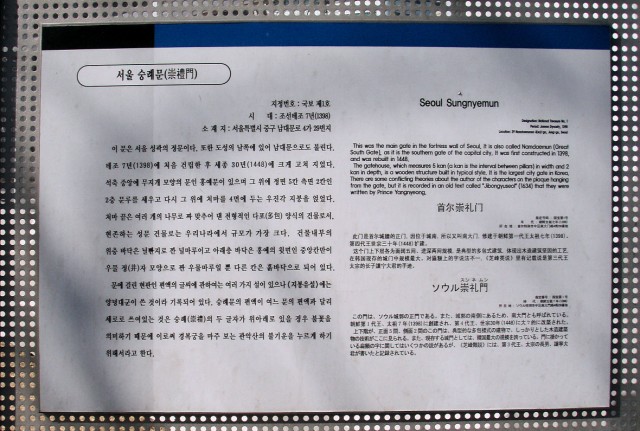
English Text:
SEOUL SUNGNYEMUN
Designation: National Treasure No. 1
Period: Jeoson Dynasty 1398
Location: 29 Namdaemunno 4(sa)-ga, Jung-gu, Seoul
This was the main gate in the fortress wall of Seoul. It is also called Namdaemun (Great South Gate), as it is the southern gate of the capital city. It was first constructed in 1398, and was rebuilt in 1448.
The gatehouse, which measures 5 kan (a kan is the interval between pillars) in width and 2 kan in depth, is a wooden structure built in typical style. It is the largest gate in Korea. There are some conflicting theories about the author of the characters on the plaque hanging from the gate, but it is recorded in and old text called "Jibongyeseol" (1634) that they were written by Prince Yangnyeong.
From the Wikipedia
Construction began in 1395 during the fourth year of the reign of King Taejo of Joseon and was finished in 1398. The structure was rebuilt in 1447 and was renovated several times since. It was originally one of three main gates, the others being the East Gate (Dongdaemun) and the now-demolished West Gate in the Seodaemun-gu district, named after the old gate.
In the early part of the 20th century, the city walls that surrounded Seoul were demolished, ostensibly "to make the traffic system more efficient." A visit to Seoul by the Crown Prince of Japan prompted the demolition of the walls around Namdaemun, as the prince was deemed to be too exalted to pass through the gateway.
The gate was closed to the public in 1907 after the Japanese colonial authorities constructed an electric tramway nearby. Namdaemun was extensively damaged during the Korean War and was given its last major repair in 1961, with a completion ceremony held on May 14, 1963. It was given the status of "National Treasure No.1" on December 20, 1962.
The Gate was renovated again in 2005 with the building of a lawn around the gate, before being opened once again to the public with much fanfare on March 3, 2006.
During the restoration, 182 pages of blueprints for the gate were made as a contingency against any emergencies which may damage the structure. Three years later, such an emergency arose.
At approximately 8:50 p.m. on February 10, 2008, a fire broke out and severely damaged the wooden structure at the top of the Namdaemun gate. The fire roared out of control again after midnight and finally destroyed the structure, despite the efforts of more than 360 firefighters.
Many witnesses reported seeing a suspicious man shortly before the fire, and two disposable lighters were found where the fire was believed to have started. A 69-year-old man identified as Chae Jong-gi was arrested on suspicion of arson and then later confessed to the crime.
A police captain reported that Chae sprayed paint thinner on the floor of the structure and then set fire to it. Police say that Chae was upset about not being paid in full for land he had sold to developers. The same man had been charged with setting a fire at Changgyeong Palace in Seoul in 2006.
Namdaemun
The photos for this waymark were taken in March 2009, about a month after Namdaemun was oficially reopened for public viewing of the reconstruction. The target date for completion is 2012, when it will once again be unveiled in all of its grandeur. It will remain National Treasure No. 1 in the minds and hearts of the people.
During the reconstruction phase, there is a wall surrounding the site with large panoramic photos of the gate, and there is a wonderful display of old photographs and history of the gate from its planning over 650 years ago, through its various phases of use, disuse, and refurbishing over the centuries.
All photos for this waymark are of those displays.
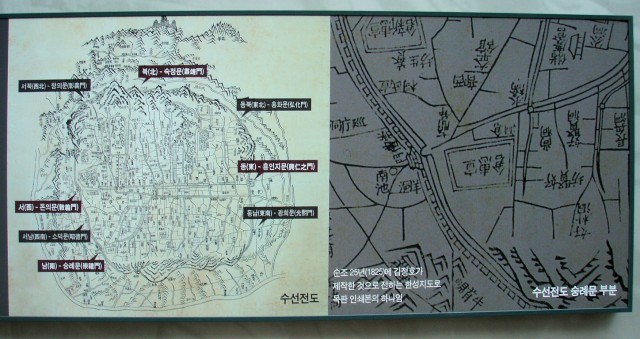
Ancient map of old Seoul showing the walls and location of Namdaemun ca. 1392
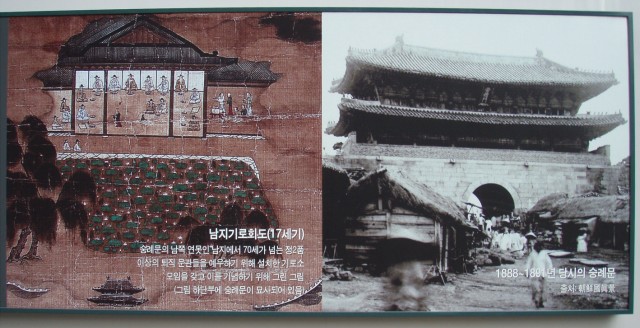
Namdaemun - 1888
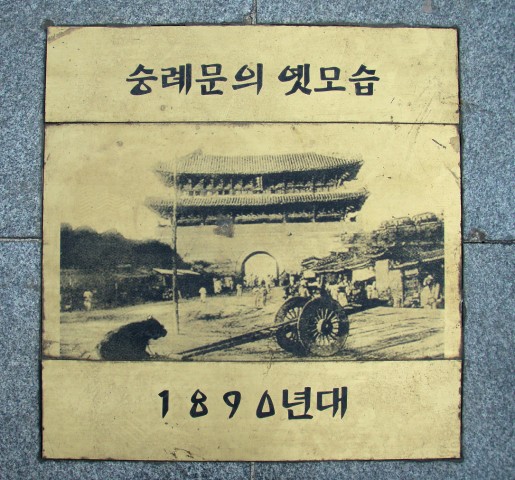
Namdaemun - 1890
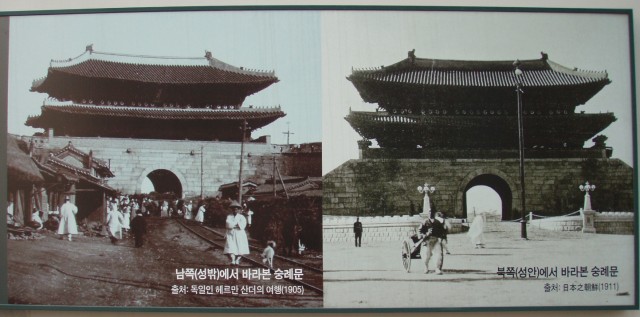
Namdaemun - 1905 (l) 1911 (r)
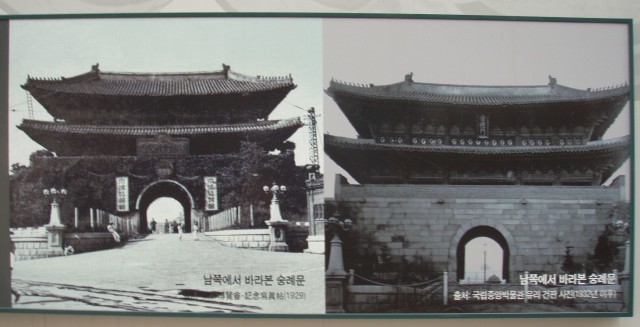
Namdaemun - 1929 (l) 1932 (r)
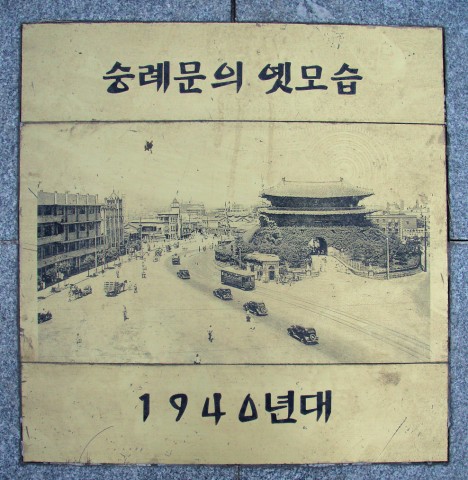
Namdaemun - 1940
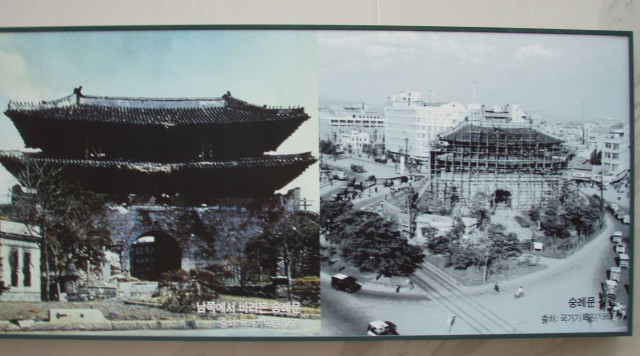
Namdaemun - 1952 (l) 1963 (r)
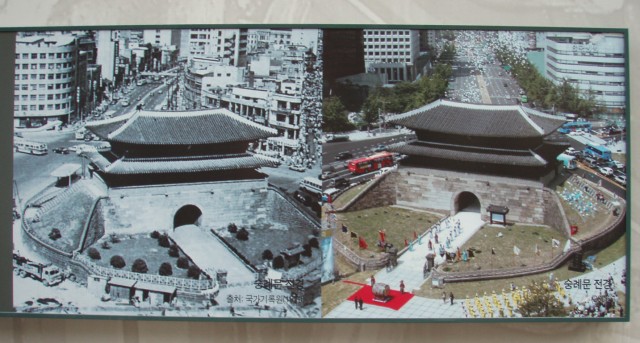
Namdaemun - 1970 (l) 2006 (r)
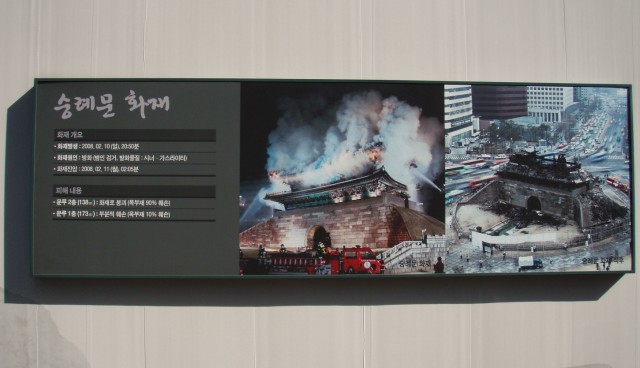
Namdaemun - Feb. 10, 2008